If you are planning to spend some time in Pipa, there is one thing that can completely transform your experience and many people ignore it: the tide table.
It may seem like a technical thing at first glance… but in practice, understanding it is what makes a day unforgettable in this paradise.
You know those photos of crystal-clear waters, little fish, and natural formations? Well, that’s exactly what they appear in the right moment. And that’s exactly what you’ll learn here.
What is the tide table?
The tide table is basically a forecast that shows the tide times and tides throughout the day.
What do high tide and low tide mean?
- High tideThe sea level is high
- Low tide: the sea level recedes, revealing sand bars and natural formations
This variation occurs daily and changes constantly.
Why this is important in Pipa
In Pipa, the tide has a direct influence:
- Access to Natural pools
- Possibility of walking between beaches
- Security in certain areas
- Quality of the tours
- Possible experiences to be achieved
For example, you can only access the idyllic beach of Baía dos Golfinhos during the low tide period.
That is to say: It is no exaggeration to say that the tide determines your itinerary.
Where to consult the tide table of Pipa
Nowadays, it is very easy to access this information.
Site for consulting the tide table in Pipa
Useful tool (recommended)
You can use the tool Moon Phases Calendar of Pipa which allows Integrate the tide directly into your Google Calendar, That, frankly, makes life much easier during the trip.
How to read the tide table in practice
Now comes the part that seems complicated… but it’s not.
Understanding schedules
The board shows specific times when the tide will be:
- At the highest point
- At the lowest point
Example:
- 04:30 — low tide
- 10:45 — high tide
Understanding altitudes (meters)
In addition to the time, you will see numbers like:
- 0.3 m
- 1.8 m
This indicates the height of the tide.
- Below 0.5 m → excellent (ideal for natural pools)
- Between 0.5 and 1.0 m → ainda bom
- Acima de 1.5 m → maré alta
O que é considerado maré boa
Se você quer aproveitar ao máximo:
- Prefira marés abaixo de 0.5 m
- Chegue cerca de 2 hora antes do pico da maré baixa
- Aproveite até cerca de 2h depois
Esse intervalo é o “horário de ouro”.
Por que a maré muda de horário todos os dias?
Se você olhar a tábua de maré por vários dias seguidos, vai notar algo curioso: os horários não se repetem.
E isso costuma confundir bastante quem está planejando a viagem.
A maré atrasa cerca de 50 minutos por dia
Na prática, a maré não acontece sempre no mesmo horário porque está ligada principalmente à influência da lua.
O que isso significa no dia a dia:
- Se hoje a maré baixa foi às 10h
- Amanhã ela será por volta de 10h50
- No dia seguinte, cerca de 11h40
Esse “atraso” médio de aproximadamente 50 minutos por dia é completamente normal.
O que causa essa variação
A principal responsável por isso é a relação entre:
- A gravidade da lua
- A rotação da Terra
- O movimento dos oceanos
Sem entrar muito no técnico: a lua “puxa” a água do mar, e como ela também está em movimento, os horários das marés mudam constantemente.
Qual a melhor maré para aproveitar Pipa?
Essa é a pergunta que todo viajante faz e a resposta depende do que você quer fazer.
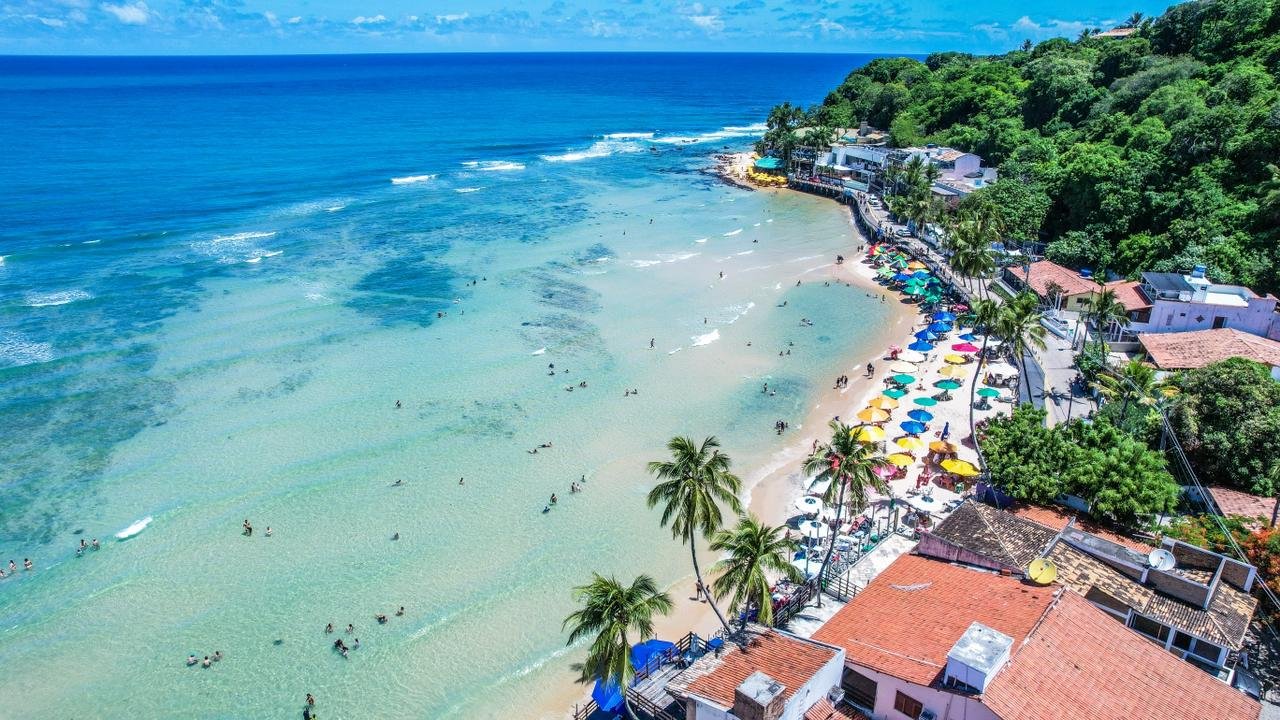
Maré baixa: piscinas naturais e passeios
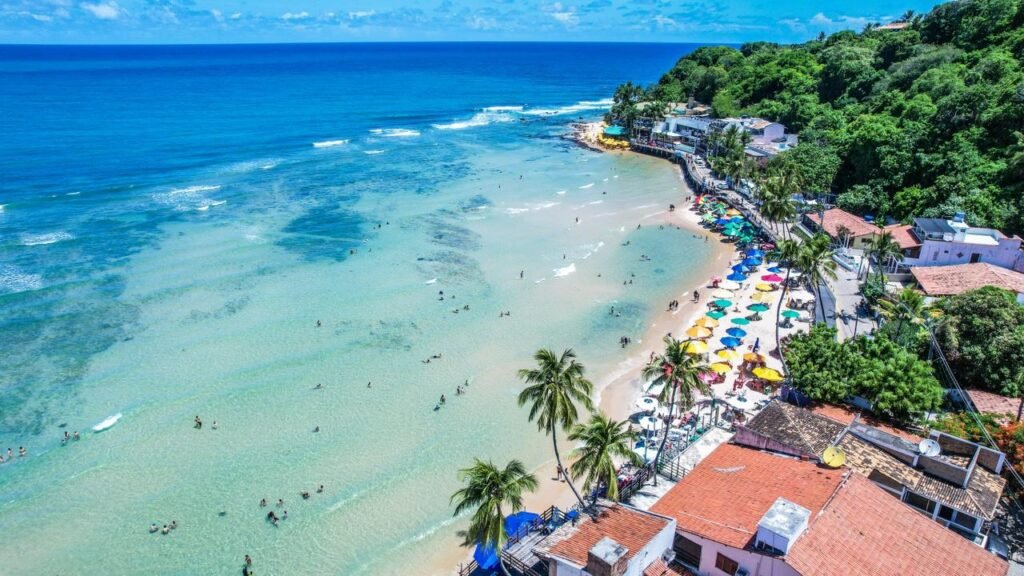
Texto alternativo da imagem: piscinas naturais em Pipa durante maré baixa
Na maré baixa, Pipa revela um cenário completamente diferente:
- Piscinas naturais se formam
- Águas ficam mais calmas e cristalinas
- Ideal para snorkel
- Perfeito para fotos
É o melhor momento para visitar:
- Praia do Madeiro (em alguns trechos)
- Baía dos Golfinhos (acesso mais fácil)
- Praia do Amor (formações naturais)
- Praia do Centro (grande extensão de areia)
High tide: when to avoid certain beaches
During high tide:
- The sand strip decreases (or disappears)
- Some beaches are difficult to access
- Waves become stronger
It doesn't mean it's bad, but it completely changes the type of tour.
Ideal for:
- Surfing
- Contemplation
- Restaurants by the sea
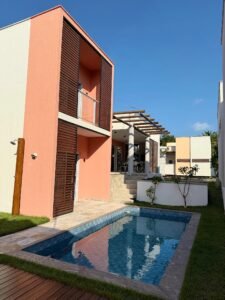
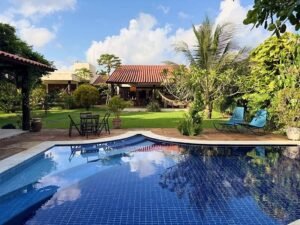
Tip: To avoid being dependent on the tide schedule, it is worth investing in a property with a swimming pool, so you can enjoy leisure moments at any time of the day. Check out the available options: real estate for sale or holiday homes with Ludmila.
Practical tips for using the tide table
Here's what really makes a difference in practice:
Plan your trips in advance
Even before leaving home:
- Consult the tide table
- Identify the days with low tide at good times
Choose the best beach hours
Want to make the most of the day?
- Early morning with low tide → perfect
- Late afternoon with high tide → good for relaxing
Attention to safety
This is important:
- Avoid rocky areas during high tide
- Beware of “paths” that disappear with high tide
- Always observe the environment
The tide rises faster than it seems.
Conclusion
Understanding the tidal table in Pipa It's not just a detail; it's what will determine whether you'll see incredible natural pools or a full sea where you can enjoy other features of Vila da Pipa.